B-Lactam Pharmaceutical Facility Decommissioning & Decontamination
By Albert Estrada
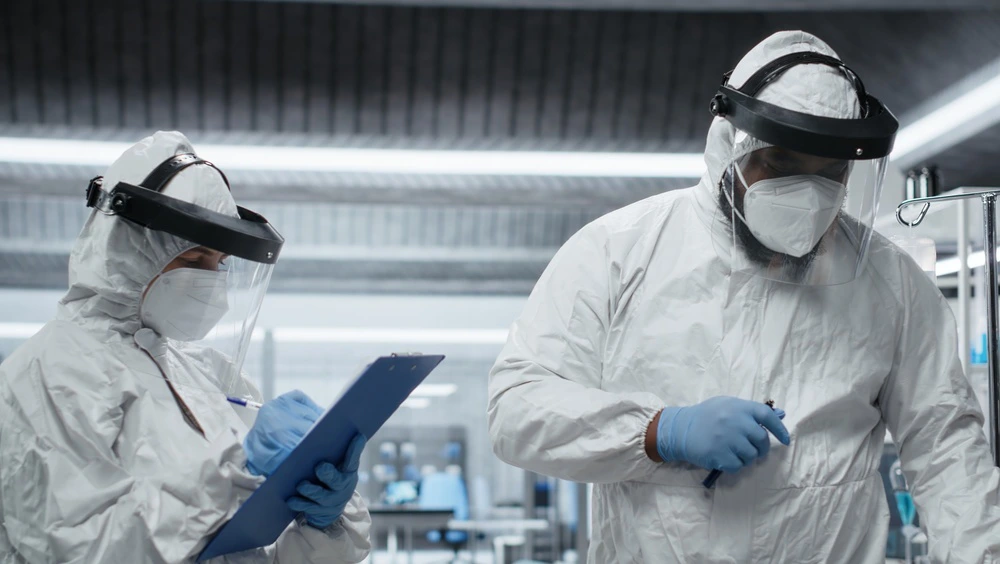
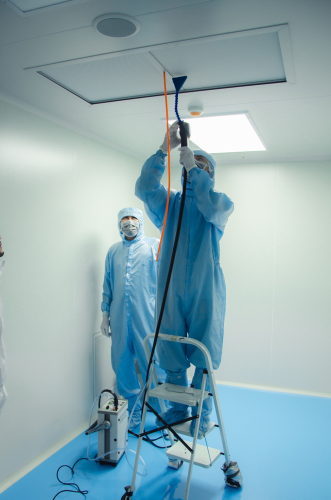
Sterile Science supported a pharmaceutical manufacturer operating two connected buildings in California that needed to fully decommission a facility previously used for B-Lactam antibiotic compounding. The site was being transitioned to non-pharmaceutical use, and the property owner required documented proof that all B-Lactam residues had been chemically neutralized and the facility was safe for general re-occupancy, including by individuals with penicillin allergies.
Challenges
-
Facility: The project covered 42,500 ft² and 924,500 ft³ volume across cleanrooms, warehouses, offices, mezzanines, and HVAC systems.
-
Contamination: B-Lactam compounds are potent allergens even at trace levels, requiring chemical denaturation rather than physical removal alone.
-
Dust: Prior partial demolition redistributed dust and potentially spread residual contaminants.
-
Odor: A lingering odor in certain areas needed to be assessed and explained to satisfy client concerns.
Solution
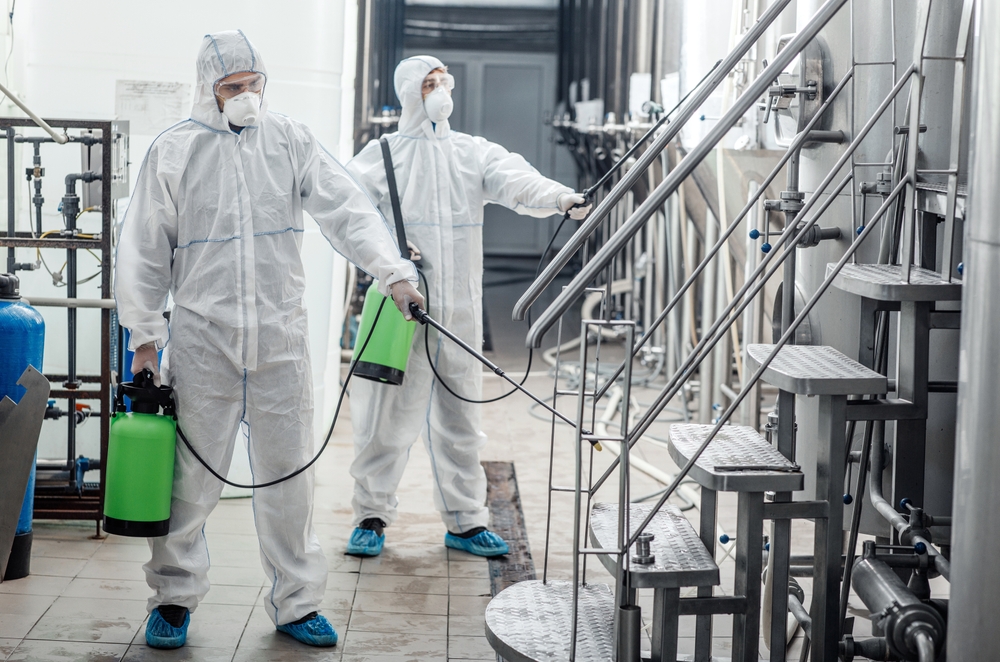
After assessing the facility requirements, Sterile Science designed a two-phase decontamination protocol combining targeted manual chemistry with facility-wide dry fog deployment.
-
Manual Denaturation: Known B-Lactam production and handling zones were wiped down using 1% sodium hypochlorite solution with a minimum 10-minute contact time, followed by a DI water rinse.
-
Lower-Risk Areas: Offices and warehouses were HEPA-vacuumed and wiped with 70% IPA.
-
Dry Fog Treatment: The entire facility, including offices, warehouses, restrooms, mezzanines, and HVAC supply and return ducts, was treated with Minncare Cold Sterilant using Sterile Science’s validated dry fog system.
-
Validation Conditions: Each room was calculated for chemical volume based on temperature, humidity, and cubic footage, with ≥70% RH maintained for a minimum 1-hour contact time in every treated zone.
Results
The facility was successfully decontaminated and validated to a 6-log sterility assurance level, with all 19 biological indicators returning negative results—confirming complete elimination of even highly resistant organisms. All work was performed under Sterile Science’s ISO-certified Quality Management System and in compliance with US FDA GMP regulations (21 CFR Parts 210, 211, and 820). This provided the documented proof required to confidently certify the space as safe for re-occupancy, removing uncertainty around residual contamination and ensuring no further remediation or regulatory oversight was needed.
To read the full case study, click here.
Albert Estrada
Director of National Operations, Sterile Science
Albert leads national operations in cleanroom decontamination, biodisinfection, and GMP compliance consulting for Sterile Science. With nearly 10 years of experience in highly regulated environments, he brings deep technical expertise across university lab management, Class II medical device compliance, EPA-regulated industrial wastewater analysis, and controlled environment operations.
Albert holds a Bachelor of Science degree in Pre-Medicine and multiple advanced certifications, including Industrial Wastewater Operator, Certified Environmental Specialist, and cGMP Cleaning & Sanitation. He is also a Council-certified Microbial Investigator (CMI) through the American Council for Accredited Certification (ACAC), enabling him to perform validated microbial investigations with board-certified expertise.
Through his work, Albert helps organizations strengthen contamination control programs, maintain compliance, and protect the integrity of critical environments.
Related Posts
Swine Barn Bio-Decontamination for Xenotransplantation Research Facility
Read More
Strengthening Data Center Infrastructure
Colorado Christian University needed to enhance the reliability and security of its disaster recovery site located near the campus. With increasing IT demands and expectations for continuous availability, CCU sought a partner to assess its current environment and deliver a roadmap for the necessary redundancy to deliver the best customer experience possible.
Read More
Case Study: Enhancing Reliability Through Promera’s Ongoing Maintenance Services
Discover how Promera’s proactive maintenance program helped a leading distributor overcome contamination challenges and boost the reliability of its high-speed warehouse operations.
Read More
Unveiling the Mystery Behind Data Center Contaminants: Real Case Studies and Solutions
Unexpected contaminants can have a devastating impact when protecting critical environments like data centers.
Read More