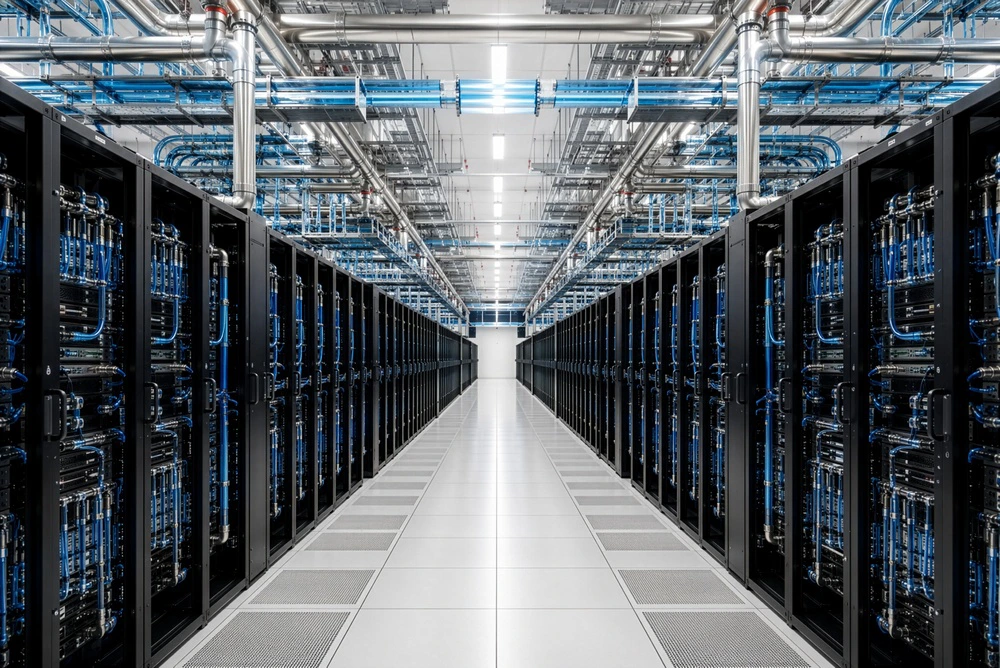
A multi-tenant data center implemented a filtration upgrade at its facility, replacing traditional disposable MERV 8 filters with washable, reusable filters. The pilot demonstrated a practical way to improve airflow efficiency, reduce cooling energy consumption, eliminate recurring filter waste, and deliver a rapid financial payback without disrupting live data center operations.
The Challenge
The data center relied on disposable filters that created ongoing replacement costs and contributed to landfill waste. Traditional MERV 8 filters also restricted airflow, increasing fan energy usage and reducing overall cooling efficiency.
The client needed a solution that could improve performance and sustainability while maintaining continuous operations in a live data center environment. Any upgrade had to be simple to implement, operationally low-risk, and capable of delivering measurable financial and efficiency gains.
Our Solution
Promera supported the replacement of disposable MERV 8 filters with washable, reusable filters designed to provide lower airflow restriction. The filtration substitution was implemented as a direct drop-in replacement, allowing the facility to improve airflow and reduce fan load without requiring infrastructure changes or operational downtime.
The solution also supported long-term sustainability goals by eliminating the need for frequent disposable filter replacement. With a reusable filter lifespan of up to 15 years, the upgrade provided a cleaner, more efficient filtration strategy while reducing waste and recurring material costs.
The Results
The pilot delivered strong financial and operational outcomes, including an estimated 1.5-year payback for the end user. Efficiency improvements produced approximately 26kW in cooling power savings, supported by reduced fan power and improved airflow throughout the facility.
The filtration upgrade also contributed to a PUE improvement, helping the data center operate more efficiently while reducing environmental impact. By eliminating disposable filter waste and improving cooling performance, the project delivered measurable energy efficiency and sustainability gains without disruption to live operations.