When the summer heat rolls in, your data center’s cooling systems work overtime to maintain optimal operating temperatures. But with increased airflow and system strain comes an often-overlooked challenge: higher levels of airborne contamination and static buildup. Both can put your equipment—and your uptime—at serious risk.
Let’s explore how seasonal cooling impacts contamination levels and the tools you need to stay ahead.
The Summer Surge: Cooling and Contamination
During the summer months, HVAC systems, CRAC units, and other cooling infrastructure run more frequently and forcefully. This increases:
- Air circulation – pushing dust and micro-contaminants throughout your white space
- Humidity fluctuations – creating environments ripe for static discharge or corrosion
- Pressure differentials – drawing in contaminants from underfloor plenums or unsealed zones
Even the cleanest environments can face higher particle counts and electrostatic discharge (ESD) events during this seasonal shift.
Why It Matters: The Risks of Inaction
Contaminants can settle on sensitive server components, causing overheating or data corruption. Electro-static discharge, even at levels too low for human detection, can degrade hardware over time. Together, these issues lead to:
- Increased unplanned downtime
- Shortened equipment lifespan
- More frequent (and costly) maintenance cycles
Your Mid-Year Refresh Toolkit
To keep things cool and clean, implement a proactive contamination and static control strategy. Here’s what we recommend:
Cold Aisle Containment
Keep cold air where it’s needed and prevent hot/cold air mixing that strains your cooling system. Helps optimize airflow and reduce overcooling.
Hot Aisle Containment
Capture and isolate hot exhaust air, increasing cooling efficiency while maintaining a more controlled environment for contamination.
Ekkosense AI Monitoring
Real-time thermal monitoring driven by AI lets you detect hot spots and airflow inefficiencies before they become costly problems.
Scheduled Deep Cleaning Services
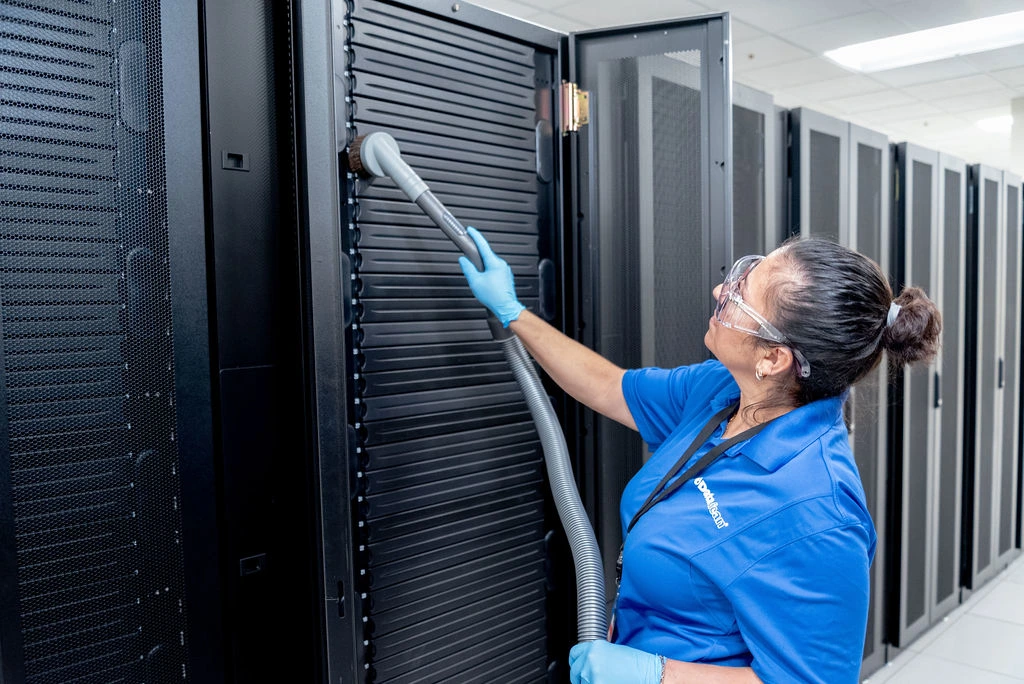
Routine cleanings or quarterly deep cleanings remove built-up dust, particulates, and static-attracting debris from underfloor, overhead, and equipment surfaces—reducing downtime risk and keeping your critical environment fully compliant.
Final Thought: A Clean Sweep for Q3
Don’t wait for an audit or a shutdown to reveal underlying risks. A mid-year facility refresh is the perfect time to recalibrate, reseal, and reinforce your static and contamination defenses—especially when your cooling systems are in high gear.